About GUYANA
 HISTORY
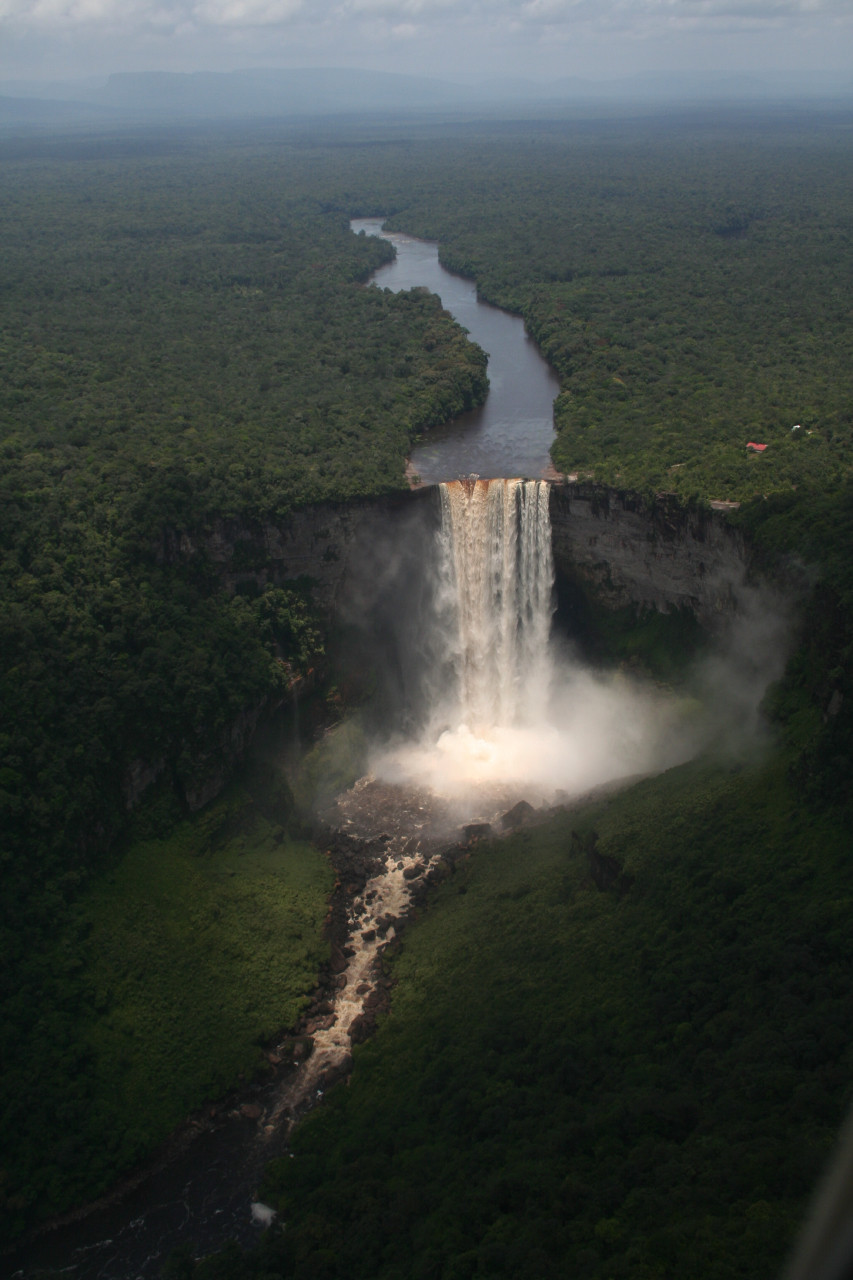
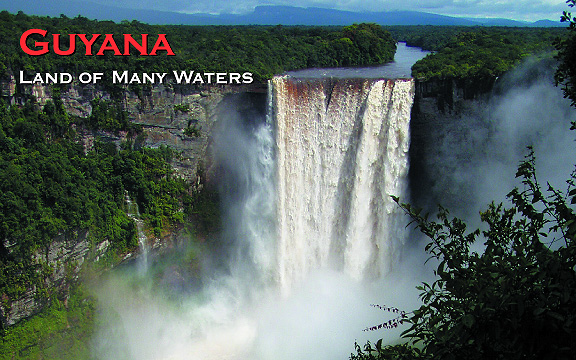
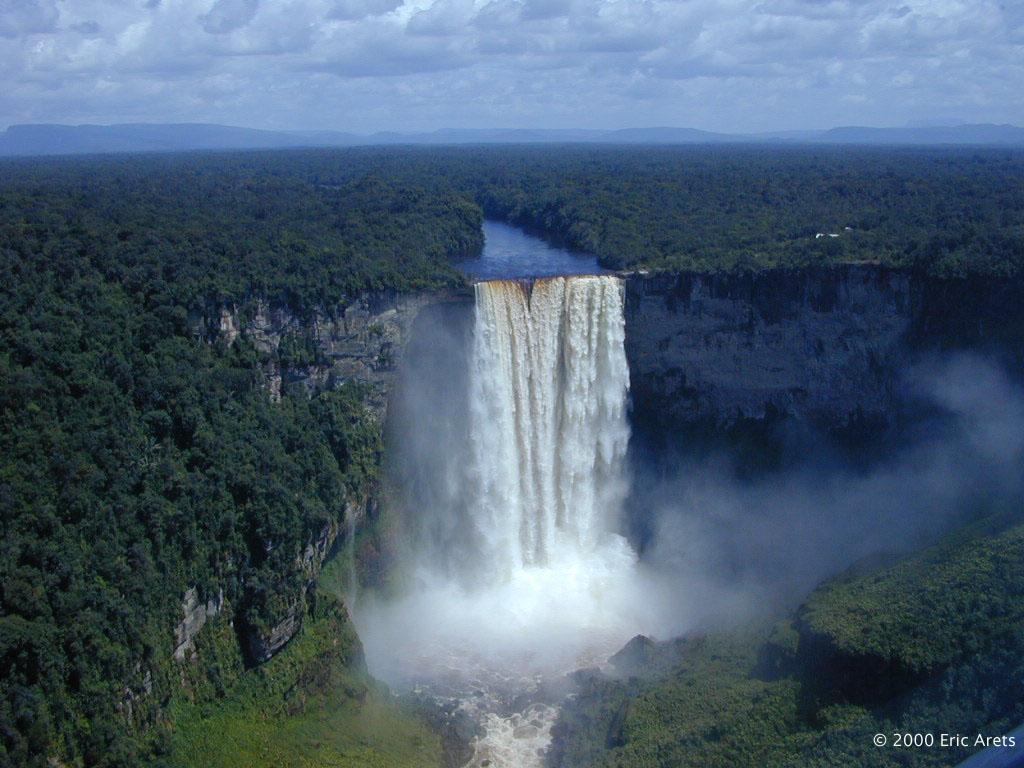
Land and Resources Guyana has three major geographical regions. A belt of alluvial soil, mostly below sea level, borders the coast in the north and is protected by dams and dikes. To the south, dense forest covers four-fifths of the country. The plants and trees of Guyana are noted for their great size; the giant water lily is very common. The forest extends to interior highlands. Several rivers flow from south to north, forming spectacular waterfalls. The country has important mineral deposits of bauxite, manganese, and gold. Dense forests contain greenheart and mora trees, which are used in the lumber industry. Animals include anteaters, monkeys, and brilliantly colored birds and insects. The name Guyana is an Amerindian word meaning Land Of Many Waters. Agriculture Agriculture accounts for about one-fourth of the gross domestic product and employs about one-third of the labor force. Sugar and its by-products and rice account for most of the agricultural exports; 3 million metric tons of sugarcane and 225,000 metric tons of rice were produced annually in the late 1980s. Coconuts, coffee, cacao, citrus fruit, corn, manioc, and other tropical fruit and vegetables are grown primarily for home consumption. Large areas of rough pasture exist in the interior savannas. Substantial numbers of cattle, hogs, sheep, and chickens are raised. MiningGuyana is a major producer of bauxite; about 1.3 million metric tons were mined annually in the late 1980s. Manganese, gold, and diamonds are also produced. Manufacturing and Energy Manufacturing in Guyana is limited to processing bauxite and to production of foodstuffs, beverages, construction materials, clothing, soap, and cigarettes. In the late 1980s Guyana had an installed electricity-generating capacity of about 168,000 kilowatts, and annual production was some 385 million kilowatt-hours, nearly all generated in thermal facilities. The country has a great potential for producing hydroelectricity. PopulationGuyana has a population of 758,619 (1991 estimate). About 50 percent of the people are of East Indian descent, and about 30 percent are of black African descent. Five percent are Native Amerindians, and about 10 percent are of mixed background. Others include Chinese and Europeans. About 90 percent of the mostly rural population lives along the coast. About 42 percent are Christians, 34 percent are Hindus, and 9 percent are Muslims. The country's official language is English. Economy and Government More History First charted by Spain in 1499, Guyana came under Dutch control by the mid-1700s. The British gained possession of Guyana in 1814. British rule brought large influxes of Africans and East Indians. In 1961 Guyana achieved internal self-government under Cheddi Jagan of the People's Progressive Party (PPP). In 1962 Jagan's austerity program led to riots and a general strike. After British troops restored order, the nation was left on the brink of economic chaos. The 1964 elections resulted in a coalition government under Forbes Burnham of the People's National Congress (PNC). On May 26th, 1966 Guyana gained independence from the British. Four years later on February 23rd, 1970 Guyana became a republic. The country is now called The Cooperative Republic of Guyana. In 1978 Guyana was the scene of the mass suicide and murder of more than 900 members of a religious cult on orders of their leader,James Warren("Jim") Jones. A new constitution became effective in 1980. Burnham was then elected president. He governed until his death in 1985, when Desmond Hoyte of the PNC became president. In 1992 an internationally supervised election returned Jagan and the PPP to power. On August 8th. 1999 President Janet Jagan announced that she is stepping down for health reasons and handing over the Presidency to Finance Minister Bharrat Jagdeo. Read here for further news. Once again on March 19th. 2001, the Guyanese People went again to the Polls. The PPP/Civic once again won the elections. | AboutPresident: Donald Ramotar (2011) Prime Minister: Samuel Hinds (1992) Land area: 76,004 sq mi (196,850 sq km); total area: 83,000 sq mi (214,970 sq km) Population (2012 est.): 741,908 (growth rate: –0.327%); birth rate: 16.69/1000; infant mortality rate: 35.59/1000; life expectancy: 67.39 Capital and largest city (2009 est.): Georgetown, 132,000 Monetary unit: Guyanese dollar Languages: English (official), Amerindian dialects, Creole, Caribbean Hindustani (a dialect of Hindi), Urdu Ethnicity/race: East Indian 43.5%, black (African) 30.2%, mixed 16.7%, Amerindian 9.1%, other 0.5% (2002 census) Religions:Protestant Pentecostal Anglican, Seventh-Day Adventist 5%, Methodist 1.7%), Hindu 28.4%, Roman Catholic 8.1%, Jehovah's Witnesses 1.1%, Muslim 7.2%, other Christian 17.7%, other 4.3%, none 4.3% (2002 census) GeographyGuyana is the size of Idaho and is situated on the northern coast of South America, east of Venezuela, west of Suriname, and north of Brazil. A tropical forest covers more than 80% of the country. GovernmentRepublic. HistoryThe Warrou people were the indigenous inhabitants of Guyana. The Dutch, English, and French established colonies in what is now known as Guyana, but by the early 17th century the majority of the settlements were Dutch. During the Napoleonic wars Britain took over the Dutch colonies of Berbice, Demerara, and Essequibo, which became British Guiana in 1831. Slavery was outlawed in 1834, and the great need for plantation workers led to a large wave of immigration, primarily of East Indians. Today, about half of the population is of East Indian descent and about 36% are of African descent. In 1889, Venezuela voiced its claim to a large swath of Guyanese territory, but ten years later an international tribunal ruled the land belonged to British Guiana. -Tyrese |